Budget 2026 proposes broader access to insured mortgage products, more 30 year amortization options, improved mortgage transparency, income verification through the CRA, and financing support for smaller multiunit properties. Here is what the proposals could mean for Canadian borrowers.
The Bank of Canada raised its policy rate to 2.50%. Rob Skoko explains the decision, questions its timing before Budget 2026, and outlines what it means for Canadian mortgage borrowers.
Canada lost approximately 68,000 jobs in September, reducing expectations for an October Bank of Canada increase. Fixed mortgage rates are still facing pressure, while Metro Vancouver apartment sales declined 18.6%.
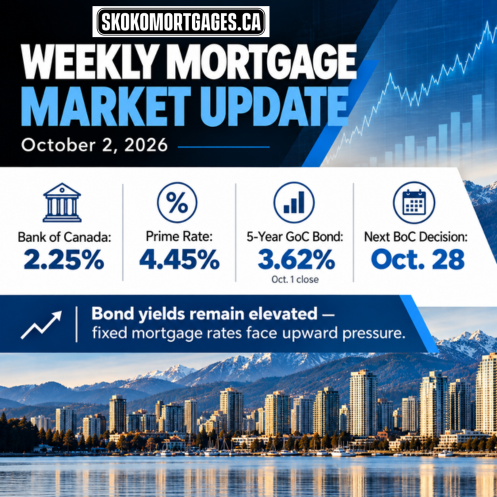
The Bank of Canada says lower rates cannot restore housing affordability on their own. Canada’s five year bond yield closed October 1 at approximately 3.62%, while weaker United States employment changed the rate conversation.
Canada’s five year bond yield closed at 3.633% after retreating from a new 52 week high. Oil moved lower, Canada and the United States remained in a trade standoff, and a Vancouver proposal could add 193 ownership homes near Oakridge.
Advertised five year fixed mortgage rates climbed to approximately 4.39% as central banks in the United States and Japan raised rates and the Bank of England held steady.
Canada’s five year government bond yield moved sharply higher, the European Central Bank raised rates, and Vancouver asking rents remained well below their 2023 peak.
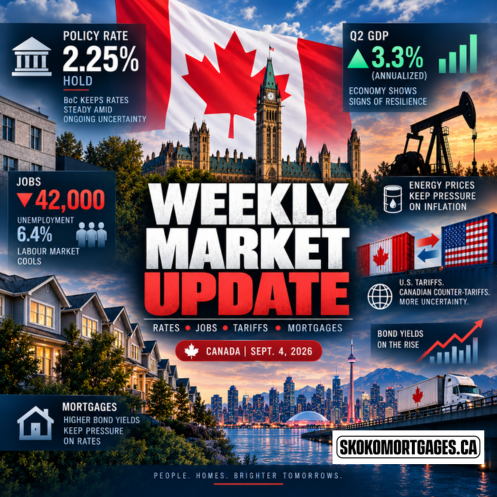
Canada lost 42,000 jobs in August, the five year bond yield remained near 3.39%, and Interior British Columbia homes took an average of 73 days to sell.
Canada grew at a 3.3% annualized pace in the second quarter, the five year bond yield moved higher, and British Columbia set its 2027 rent increase limit at 2.2%.
The five year bond yield finished near 3.36%, advertised variable rates remain below five year fixed rates, and new United States tariffs took effect after trade talks collapsed.